Butterfly Koi Care: Long-Finned Koi in the Pond
Butterfly koi are long-finned koi with identical care: 1,000+ gallons, 3+ feet deep, coldwater temperatures, and an omnivore diet. Pond setup, water, and feeding.
Butterfly koi are koi with flowing, elongated fins, sometimes called long-fin koi or dragon koi. The crucial thing to know is that their care is identical to standard koi: the same minimum 1,000-gallon pond, the same 3+ feet of depth, the same coldwater temperatures, and the same omnivore diet. The only real difference is those graceful, draping fins, which are purely cosmetic.
Butterfly koi care at a glance
| Care factor | Recommendation |
|---|---|
| Minimum pond size | 1,000 gallons |
| Minimum depth | 3 feet (4+ feet where it freezes) |
| Adult size | 24 to 36 inches (longer with trailing fins) |
| Temperature range | Ideal 65 to 75 F, tolerates 35 to 85 F |
| Diet | Omnivore (floating pellets, greens, occasional treats) |
| Temperament | Peaceful, social, non-aggressive |
| Lifespan | Decades (commonly 15 to 30+ years) |
| Gallons per fish | About 250 gallons per adult fish |
Because the requirements match standard koi exactly, use our pond volume calculator to confirm your gallons, then the koi stocking calculator to set safe numbers.
Food for vibrant butterfly koi

Tetra Koi Growth Soft Sticks, 4.85 lb
$46.97 on Amazon
High-protein growth food for warm water and developing koi.
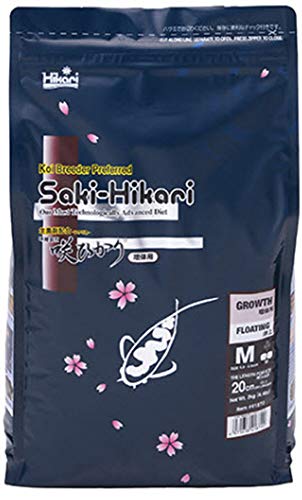
Hikari Saki Growth Color-Enhancing Food, 4.4 lb
$59.29 on Amazon
Vitamin-rich growth and color formula for koi and pond fish.

HARUTO Koi Food Color Enhancer, 11 lb
$56.04 on Amazon
Color-enhancing pellets to deepen reds, whites, and scale shine.

Blue Ridge Koi Food Color Growth Formula, 5 lb
$33.75 on Amazon
Floating pellets blending growth nutrition with color enhancement.
Pond setup for butterfly koi
Set up a butterfly koi pond exactly as you would for any koi: at least 1,000 gallons of water with a deep zone of 3 feet or more, 4 feet where hard freezes occur. Depth protects the fish from temperature swings, summer heat, and predators, and it provides the frost-free refuge they need to overwinter. Those long fins make butterfly koi a tempting target for herons, so depth plus netting is doubly worthwhile.
Filtration, turnover, and aeration
Butterfly koi carry the same heavy bioload as standard koi, so strong filtration is essential. Combine mechanical and biological filtration, and size your pump so the whole pond turns over at least once per hour, with pump GPH meeting or exceeding pond gallons. Our pond pump calculator handles the sizing. Add steady aeration from an air pump to keep dissolved oxygen high through summer and to maintain a gas-exchange hole under winter ice. A UV clarifier of about 10 watts per 1,000 gallons keeps green water in check.
Water and seasons
Stable, well-cycled water is the foundation. Test weekly: ammonia and nitrite at zero, nitrate moderate, and pH steady between roughly 7.0 and 8.5. Always dechlorinate tap water before topping off, and never stock a pond that has not finished cycling. Our pond nitrogen cycle guide explains how to build the bacteria that keep ammonia in check.
Through the year, butterfly koi follow the same rhythm as standard koi. They grow hardest in warm summer water, slow down in autumn, and go dormant in winter. Once water drops below about 50 degrees, stop feeding and let them settle into the deep zone, running a de-icer or aerator so the surface never seals over completely. Our overwintering koi guide covers the cold months in detail.
Diet and feeding
Feed butterfly koi as omnivores. A quality floating pellet is the staple, and floating food lets you watch each fish and admire those fins at feeding time. Use higher-protein growth formulas for young, growing koi in warm water, and color-enhancing foods with spirulina to bring out vivid reds and crisp whites. Feed only what they clear in about five minutes, once or twice daily in summer, tapering as the water cools.
Overfeeding fouls the water fast and spikes ammonia, which is hard on any koi. As autumn arrives, transition to an easy-to-digest wheat-germ food, then stop feeding entirely once water falls below about 50 degrees. Occasional treats such as blanched greens are fine but should never crowd out the balanced pellet base.
Pondmates and temperament
Butterfly koi share the calm, social temperament of all koi and quickly learn to greet you at feeding time. They cohabit happily with standard koi, comet and shubunkin goldfish, golden orfe in large ponds, and weather loaches. They are not aggressive, though those trailing fins can occasionally be nipped by livelier fish, so keep an eye on community dynamics and ensure there is space for everyone.
Keep them only with other coldwater pond fish, never tropical species. The main risk to a butterfly koi is predation, since long fins draw the eye of herons and raccoons. Net the pond and rely on depth for cover.
Health and common problems
As with all koi, most health issues start with water quality, so test first whenever something looks off. Watch the long fins closely, since fraying, redness, or a ragged edge can signal fin rot or poor water before the rest of the fish shows symptoms. Pond salt at a measured dose can help stressed fish, but always dose to your real volume using the pond salt calculator.
Quarantine every new butterfly koi before adding it to the pond, since new fish are the most common route for parasites and disease. This guide is educational, not veterinary advice. If a fish is clearly ill or injured and does not improve with better water, consult a koi specialist or aquatic vet.
Breeding notes
Butterfly koi spawn in late spring and early summer like standard koi, scattering eggs over plants or spawning mats. Long-fin traits do not always pass cleanly to offspring, so a butterfly koi spawn produces a mix of fin types. As always, fry add quickly to your stocking math, so revisit the koi stocking calculator before raising a batch.
Curious about indoor fishkeeping? Our sister site FishTankCalculator.com covers aquariums.
Pond Build & Maintenance Planner
Build planner, stocking planner, water-test log, and seasonal maintenance schedule, in one printable planner that keeps your pond healthy year-round.
Frequently Asked Questions
What is the difference between butterfly koi and regular koi?
Butterfly koi are simply long-finned koi. They carry a gene that produces flowing, elongated fins, barbels, and tail, giving them a graceful, draping look as they swim. Care, pond size, depth, temperature, and diet are all identical to standard koi. The only practical difference is their appearance and the way those long fins ripple, which is purely cosmetic.
How big do butterfly koi get?
Butterfly koi reach roughly the same body length as standard koi, about 24 to 36 inches as adults, and their trailing fins make them look even larger in the water. Their long fins and full body mean they need the same generous space, so plan for at least 1,000 gallons and around 250 gallons per fish.
Do butterfly koi need a bigger pond than regular koi?
No, the requirements are the same: a minimum of 1,000 gallons and at least 3 feet of depth, with more space always better. Butterfly koi are the same coldwater, heavy-waste fish as standard koi, so the filtration, aeration, and stocking math do not change. Their long fins are decorative and do not alter their footprint.
Can butterfly koi survive winter outdoors?
Yes. Like all koi they are coldwater fish that overwinter in a deep pond. Provide at least 3 feet of depth, and 4 feet or more where hard freezes occur, then keep a hole open in the ice with a de-icer or aerator so gases can escape. Stop feeding once water drops below about 50 degrees and let them rest in the deep zone.
Are butterfly koi fins prone to damage?
Those long fins can fray on sharp rocks or tear if fin rot sets in, but in clean, well-maintained water they stay healthy and elegant. Keep good water quality, avoid sharp edges around the pond, and watch for ragged or reddened fins as an early warning. Quality water and a balanced diet are the best protection for their signature look.
What should I feed butterfly koi?
Feed the same omnivore diet as standard koi: a quality floating pellet as the staple, with growth formulas for warm water and young fish and color-enhancing foods to deepen reds and whites. Feed only what they finish in about five minutes, and switch to a wheat-germ food as autumn cools the water. Stop feeding entirely below about 50 degrees.
Planning or running a pond?
Use our free calculators and guides to get every number right.
Pond Planner: $39