Beneficial Bacteria in Ponds
How beneficial bacteria run a pond’s nitrogen cycle, where they live, how to protect them when cleaning your filter, and when to seed a new pond or add cold-water bacteria.
Beneficial bacteria are the invisible workforce of every healthy pond. They run the nitrogen cycle, turning the toxic ammonia in fish waste into nitrite and then into far safer nitrate, and they break down the sludge that would otherwise foul your water. The headline truth: these bacteria live on surfaces, not in the water column, so the way you treat your biofilter media decides whether your pond stays safe. Never power-wash media or rinse it in chlorinated tap water, and you protect the colony that keeps your koi alive.
What beneficial bacteria do
Two broad groups do the heavy lifting in a pond:
- Nitrifying bacteria handle the dangerous chemistry. One group converts ammonia into nitrite, and a second converts nitrite into nitrate. Both ammonia and nitrite are toxic to fish even at low levels, so this conversion is the core of safe water.
- Heterotrophic bacteria are the cleanup crew. They digest organic waste such as fish droppings, uneaten food, and fallen leaves, reducing the sludge that builds up on the pond floor and in the filter.
When this system is established and humming, your test kit reads zero ammonia and zero nitrite around the clock. That is the goal of every other thing you do for water quality.
Bacteria and biofilter media

Aquascape Beneficial Bacteria Concentrate, 1.1 lb
$31.99 on Amazon
Eight concentrated strains plus PSB to clear water and boost the nitrogen cycle.

Pond Worx Pond Bacteria for Large Ponds, Gallon
$26.99 on Amazon
Koi-safe liquid bacteria sized for big water features and seasonal top-ups.

Aquatic Experts Bio Balls for Ponds, 100 ct with bag
$24.99 on Amazon
High surface-area media that houses nitrifying bacteria; treats up to 330 gallons.
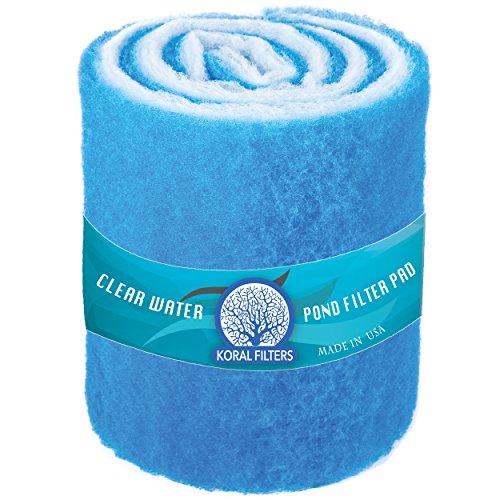
Koral Filters Koi Pond Filter Media Roll, cut to fit
$33.91 on Amazon
Reusable bonded pad for mechanical filtration that also grows a bacterial film.
Where the bacteria live
This is the detail that trips up new pond keepers. Beneficial bacteria are not dissolved in the water like salt. They grow as a thin, sticky biofilm clinging to surfaces, and the more surface area you give them, the larger the colony they build. Their main neighborhoods are:
- Biofilter media: the foam, bio-balls, sintered glass, ceramic rings, or matting in your filter. This is engineered to maximize surface area and is by far the densest bacterial habitat in your system.
- Rocks, gravel, and pond walls: every hard surface develops a colony over time.
- Pump bodies, pipes, and plumbing: the warm, wet, flowing interior is ideal.
- Plant roots: a bog or planted shelf adds significant biological capacity.
Because the colony lives on surfaces, two practices follow naturally. First, give your bacteria plenty of quality media. Second, treat that media as the living thing it is. A bigger pond with a heavier koi load needs more aeration to keep both fish and bacteria supplied with oxygen, and you can size that with our pond aeration calculator.
Protecting your bacteria when you clean
The fastest way to crash a pond is to scrub the bacteria away by accident. Chlorine and chloramine in municipal tap water are designed to kill bacteria, and they do not distinguish between the harmful kind and the beneficial kind. A blast from the garden hose can wipe out weeks of colony growth in seconds. Follow these rules and your colony survives routine maintenance:
- Never rinse media under chlorinated tap water. Use pond water you have just removed, or dechlorinated water.
- Do not power-wash or scrub media. Swish it gently in a bucket to knock off heavy gunk, leaving the biofilm intact.
- Clean in stages. Rinse only part of your media at a time, and on different days, so a portion of the colony always stays untouched.
- Never replace all media at once. Swapping everything together resets your cycle and triggers an ammonia spike.
- Mind the heat. Bacteria left out of water dry out and die, so work quickly and keep media wet.
Seeding a new pond
A brand-new pond has no established colony, which is why you must never stock it with a full load of fish on day one. Building the colony first is the whole point of cycling. You can speed it up dramatically:
- Add bottled bacteria. Dose a quality starter culture per the label to inoculate your media.
- Borrow from an established pond. A handful of mature filter media, a squeeze of dirty filter foam, or some seasoned gravel transplants a live colony instantly.
- Provide an ammonia source. Bacteria need food to multiply, whether that is a few hardy starter fish stocked slowly or a measured fishless ammonia dose.
- Test relentlessly. Watch ammonia rise and fall, then nitrite rise and fall, until both read zero before adding your full fish load.
Our full walkthrough lives in the nitrogen cycle guide, and it is worth following step by step before any koi go in.
Cold-water bacteria and the spring restart
Bacteria do not vanish in winter, but below roughly 50 degrees Fahrenheit they go largely dormant and the colony shrinks. That is fine while your fish are also dormant and not feeding. The risk comes in spring. As the water warms, koi wake up and start eating before the depleted biofilter has rebuilt, so ammonia can spike right when you least expect it. This is the classic spring crash.
Cold-water bacteria products are formulated to stay active at lower temperatures than standard cultures. Dosing them in early spring gets your filter ahead of the fish, so the colony is ready when the first warm-day feeding begins. Pair that with light feeding and frequent testing through the spring warm-up, and you sidestep the most common seasonal water-quality scare. A simple rhythm of seasonal bacteria top-ups, gentle media care, and a reliable test kit keeps the invisible workforce strong all year.
Pond Build & Maintenance Planner
Build planner, stocking planner, water-test log, and seasonal maintenance schedule, in one printable planner that keeps your pond healthy year-round.
Frequently Asked Questions
What do beneficial bacteria do in a pond?
Beneficial bacteria run your pond’s nitrogen cycle. Nitrifying bacteria convert toxic ammonia from fish waste into nitrite, then into far safer nitrate. Other heterotrophic strains break down sludge, leaves, and uneaten food. Together they keep ammonia and nitrite at zero, the single most important factor in keeping koi healthy. Without an established bacterial colony, waste accumulates fast and fish are quickly poisoned.
Where do beneficial bacteria actually live?
The vast majority live as biofilm on surfaces, not floating in the water. Your biofilter media is their main home, which is why media surface area matters so much. They also coat rocks, gravel, pump housings, plant roots, and the pond walls. Only a tiny fraction drift freely, so protecting your filter media protects the colony that keeps your water safe.
Can I clean my filter without killing the bacteria?
Yes, if you are gentle. Never power-wash media or rinse it under chlorinated tap water, because chlorine kills bacteria on contact. Instead, swish the media in a bucket of pond water you just removed, just enough to knock off heavy sludge, then put it back. Clean only part of your media at a time, and never replace it all at once or you reset the cycle.
Do I need to add bottled bacteria to a pond?
It is not strictly required, since bacteria colonize naturally, but bottled cultures speed things up. They are most useful when starting a new pond, after a deep clean, following medication that harmed the colony, and in spring when the biofilter is waking up. Cold-water formulas are made to seed bacteria while temperatures are still low, getting your filter ahead of the spring feeding surge.
How long does it take to build a bacteria colony?
A new pond typically takes four to eight weeks to fully cycle at warm temperatures, longer in cold water. During that window ammonia rises first, then nitrite, and both must fall to zero before the pond is safe for a full fish load. Seeding with bottled bacteria, media from an established pond, or filter squeezings can shorten this considerably.
Does cold weather kill pond bacteria?
Cold water slows them dramatically rather than killing them outright. Below roughly 50 degrees Fahrenheit nitrifying bacteria become largely dormant, which is fine because your fish also stop eating and producing waste. The colony shrinks over winter and rebuilds in spring. Cold-water bacteria products are formulated to stay active at lower temperatures and jump-start the filter as the pond warms.
Planning or running a pond?
Use our free calculators and guides to get every number right.
Pond Planner: $39